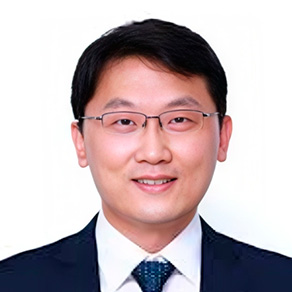

Bo Han
[introductory/intermediate] Trustworthy Machine Learning from Data to Models
Summary
Trustworthy machine learning seeks to handle critical problems in addressing the issues of robustness, privacy, security, reliability, and other desirable properties. The broad research area has achieved remarkable advancement and brings various emerging topics along with the progress. This tutorial provides a systematic overview of the research problems under trustworthy machine learning covering the perspectives from data to model. Starting with fundamental data-centric learning, the tutorial reviews learning with noisy data, long-tailed distribution, out-of-distribution data, and adversarial examples to achieve robustness. Delving into private and secured learning, this tutorial elaborates on core methodologies of differential privacy, different attacking threats, and learning paradigms, to realize privacy protection and enhance security. Meanwhile, this tutorial introduces several trendy issues related to the foundation models, including jailbreak prompts, watermarking, and hallucination, as well as causal learning and reasoning. To sum up, this tutorial integrates commonly isolated research problems in a unified manner, which provides general problem setups, detailed sub-directions, and further discussion on its challenges or future developments.
Syllabus
Session I: Trustworthy Data-centric Learning
• Data-noise learning.
• Long-tailed and out-of-distribution learning.
• Adversarial examples and defense.
Session II: Trustworthy Private and Secured Learning
• Differential privacy.
• Membership inference, model inversion and data poisoning attacks.
• Machine unlearning, non-transfer learning, and federated learning.
Session III: Trustworthy Foundation Models
• Jailbreak prompts and guardrails.
• Watermarking and reasoning.
• Hallucination detection.
Open Research Questions
• Causal learning and reasoning.
• Open vs. proprietary foundation models.
References
Michael I. Jordan and Tom M. Mitchell. Machine Learning: Trends, Perspectives, and Prospects. Science, 2015.
Yann LeCun, Yoshua Bengio, and Geoffrey Hinton. Deep Learning. Nature, 2015.
Pin-Yu Chen and Sijia Liu. Introduction to Foundation Models. Springer Nature, 2025.
Bo Han and Tongliang Liu. Trustworthy Machine Learning under Imperfect Data. Springer Nature, 2025.
Bo Han, Jiangchao Yao, Tongliang Liu, Bo Li, Sanmi Koyejo, and Feng Liu. Trustworthy Machine Learning: From Data to Models. Foundations and Trends® in Privacy and Security, 2025.
Pre-requisites
Basic understanding of machine learning principles, including supervised, semi-supervised and unsupervised learning, optimization methods, representation learning, and foundation models. Foundational knowledge in linear algebra and probability is helpful but not mandatory.
Short bio
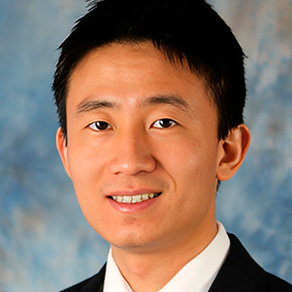
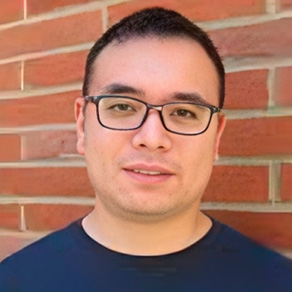
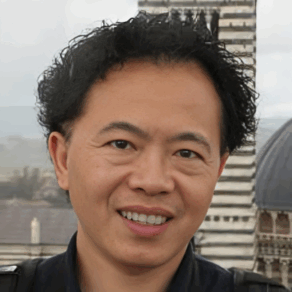
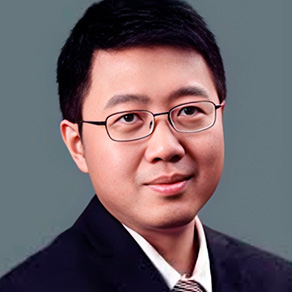
Prof. Bo Han is currently an Associate Professor in Machine Learning at Hong Kong Baptist University and a BAIHO Visiting Scientist at RIKEN AIP. He has served as Senior Area Chair of NeurIPS and ICML, and Area Chair of ICLR, UAI and AISTATS. He has also served as Associate Editor of IEEE TPAMI, MLJ and JAIR, and Editorial Board Member of JMLR and MLJ. He received paper awards, including Outstanding Paper Award at NeurIPS and Most Influential Paper at NeurIPS. He received the RGC Early CAREER Scheme, IEEE AI’s 10 to Watch Award, IJCAI Early Career Spotlight, INNS Aharon Katzir Young Investigator Award, IEEE Computing’s Top 30 Early Career Professional Award, RIKEN BAIHO Award, Dean’s Award for Outstanding Achievement, and Microsoft Research StarTrack Scholars Program. He is an ACM Distinguished Speaker and IEEE Senior Member. See his full bio at: https://bhanml.github.io/.